
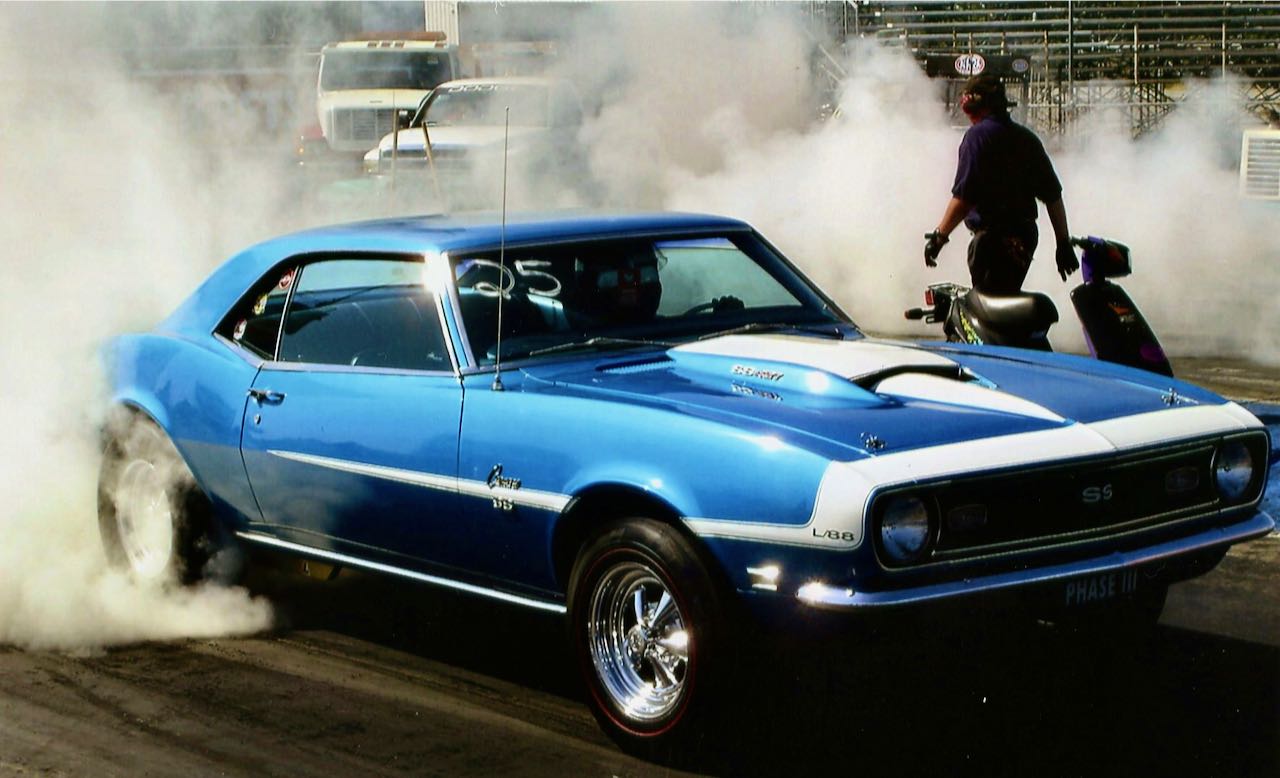
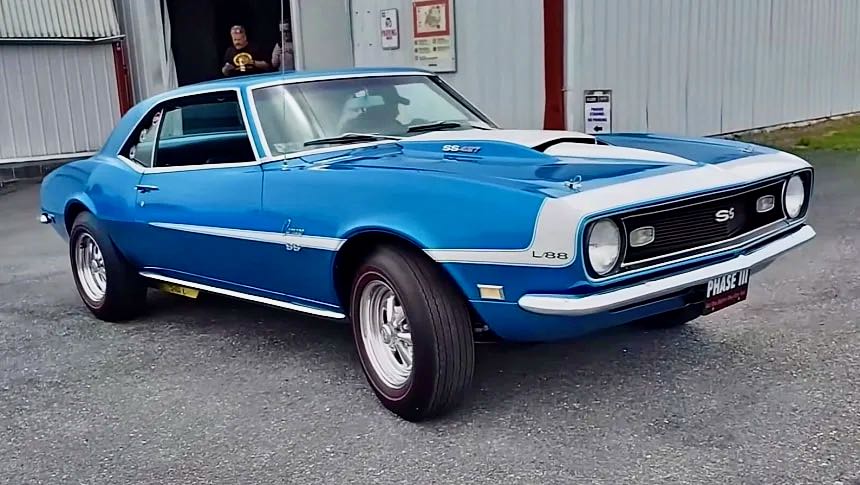
Baldwin-Motion offered something for everyone, from entry-level SS-427 Biscaynes to Phase III Corvettes, and Mark Hassett’s strip-scorching ’68 BALDWIN-MOTION L88 CAMARO.
 Joel Rosen kicked off Baldwin-Motion’s second model year with five SS-427 nameplates, the most aggressive model range in the history of niche market muscle. By mid-model year, he had added Phase III options, including an aluminum-head L88 engine, and increased production of export Camaros and Corvettes, establishing Baldwin-Motion as the market’s principal purveyor of maximum muscle.
Chevrolet made minor trim changes for 1968 (striping, four new colors, and ventless side windows), and added the 396/375 engine option, the L89, which came standard with L88 Corvette-style aluminum heads. The horsepower rating was the same as the basic L78, with the bonus being lighter alloy heads that reduced weight over the front wheels. Production was very small as the L89 option was introduced primarily for racers and offered few advantages on the street. As far as Rosen was concerned, it was business as usual for 427 Ponycars and Supercars, including the new ’68 BALDWIN-MOTION L88 CAMARO.
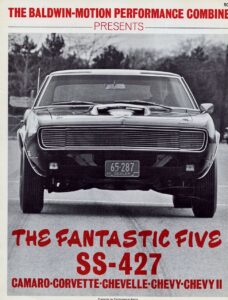
He built a few Camaro demos and Baldwin Chevrolet showroom cars in 1968. The wildest was the first one – a white-striped Tuxedo Black SS-427 – that served as the development car for what was to become the 500-horsepower Phase III model. I photographed it for the cover of the Fantastic Five catalog and the “Get One Before It Gets You!” and “Take an ATTITUDE!” full-page ads that ran in national publications. Once the 500-horsepower Phase III combination was fully sorted out, the Camaro was made available to selected enthusiast magazine journalists for road testing.
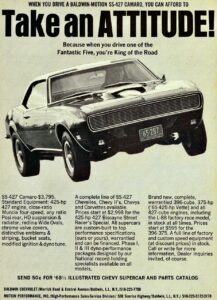 After the demo Camaro (fitted with cheater slicks) turned in under-five-second 0 to 60 mph sprints, 11.50-second quarter-mile ets, and trap speeds in excess of 120 mph, Rosen announced his legendary written money-back performance guaranty. “We guarantee that our Phase III Camaro will turn at least 120 mph in 11.50 seconds or better, with an M/P-approved driver on an AHRA or NHRA-sanctioned drag strip. The Phase III Camaro is a completely streetable, reliable machine that will run these times off the street.”
During the Phase III development program, Rosen fitted his black SS/RS-427 demo with a variety of engine combinations, including dual four-barrel induction utilizing opposed and staggered Holleys on an Edelbrock manifold, modified aluminum L88 intake manifold with single three- and four-barrel Holley carburetors, and even a trick gear-driven L88 camshaft. The base Baldwin-Motion SS-427 Camaro priced at $3,795.00 was equipped with a dyno-tuned stock 425-horsepower 427 big-block with chrome valve covers and M/P-modified ignition, close-ratio Muncie four-speed, beefed Posi rear with choice of gear ratio, Heavy-Duty suspension and radiator, factory redline Wide Oval tires, bucket seats and distinctive emblems and striping. Priced at just $4,998.88, the Phase III SS-427 Camaro came with all base SS-427 Camaro standard equipment plus just about everything you would need to go street or strip racing.
For an extra $1,203.88 you could drive out of the Baldwin Chevrolet lot in a 500-plus horsepower Phase III SS-427 Camaro equipped with a special aluminum high-rise intake manifold fitted with a dyno-jetted Holley three-barrel carburetor, Motion/Mallory Super Spark ignition with burn-proof Ramcharger ignition wires with Rajah plug connectors, tuned equal length headers and special free-flow mufflers, dual electric fuel pump, Phase III solid-lifter camshaft and valve train, Schiefer RevLok clutch and aluminum flywheel, Lakewood NHRA-approved scattershield, clutch fan, power front disc brakes and the trademark functionally-scooped fiberglass hood. The first production 1968 Phase III Camaro, a black SS/RS-427 with white racing stripes and Corvette side exhausts, was debuted in Baldwin-Motion’s exhibit at the 1968 New York International Auto Show.
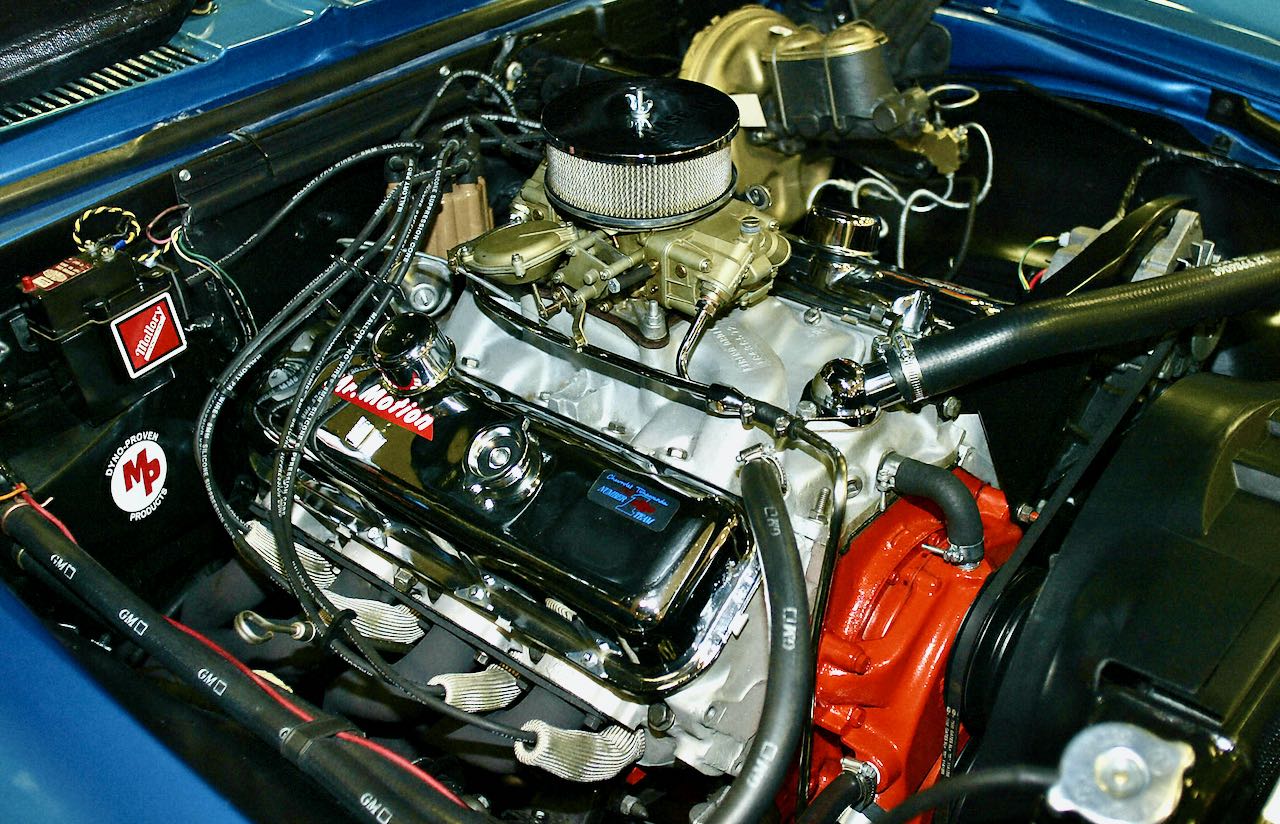 Baldwin-Motion Camaros, as well as Chevelles, Novas, full-size Chevys and Corvettes, could be ordered with limited-production L88 aluminum head, 12.5-to-1 compression engines, above, which required 103 octane fuel and came with M22 close-ratio four-speed or an 11.0-to-1 L89 engine, a low-compression version of Chevrolet’s venerable road racing engine. Option price for either on an exchange basis was just $500 installed. Because an L88 engine runs best with open exhausts and requires minimum 103-octane fuel, the ’68 BALDWIN-MOTION L88 CAMARO was a limited build.
Mark Hassett, who owns a roofing company in Ashtabula, OH, is the third owner of an original ’68 BALDWIN-MOTION L88 CAMARO – a white-striped LeMans Blue SS-427 coupe – featured here that rides on chromed Cragar wheels. With more than 10,000 miles on its odometer, it’s a regular at shows and trackside at the YSC Supercar Reunions where Jeff Murphy captured the tire-frying lead photo.
The 1968 lineup of super performance Chevys offered something for everyone and put Baldwin-Motion truly in a class by itself.
 Check out Mark Hassett’s ’68 BALDWIN-MOTION L88 CAMARO at the 2026 Carlisle GM Nationals @ https://www.autoevolution.com/news/1968-chevrolet-motion-camaro-packs-corvette-l88-it-s-rarer-than-hen-s-teeth-272246.html