
Proven on the quarter-mile, a detuned race Hemi is optional in 1966 Plymouth & Dodge midsize models, proving that STREET (426 HEMI) IS NEAT!
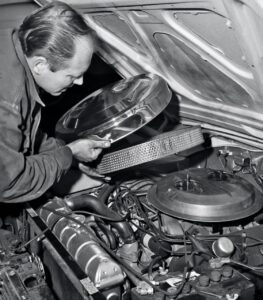
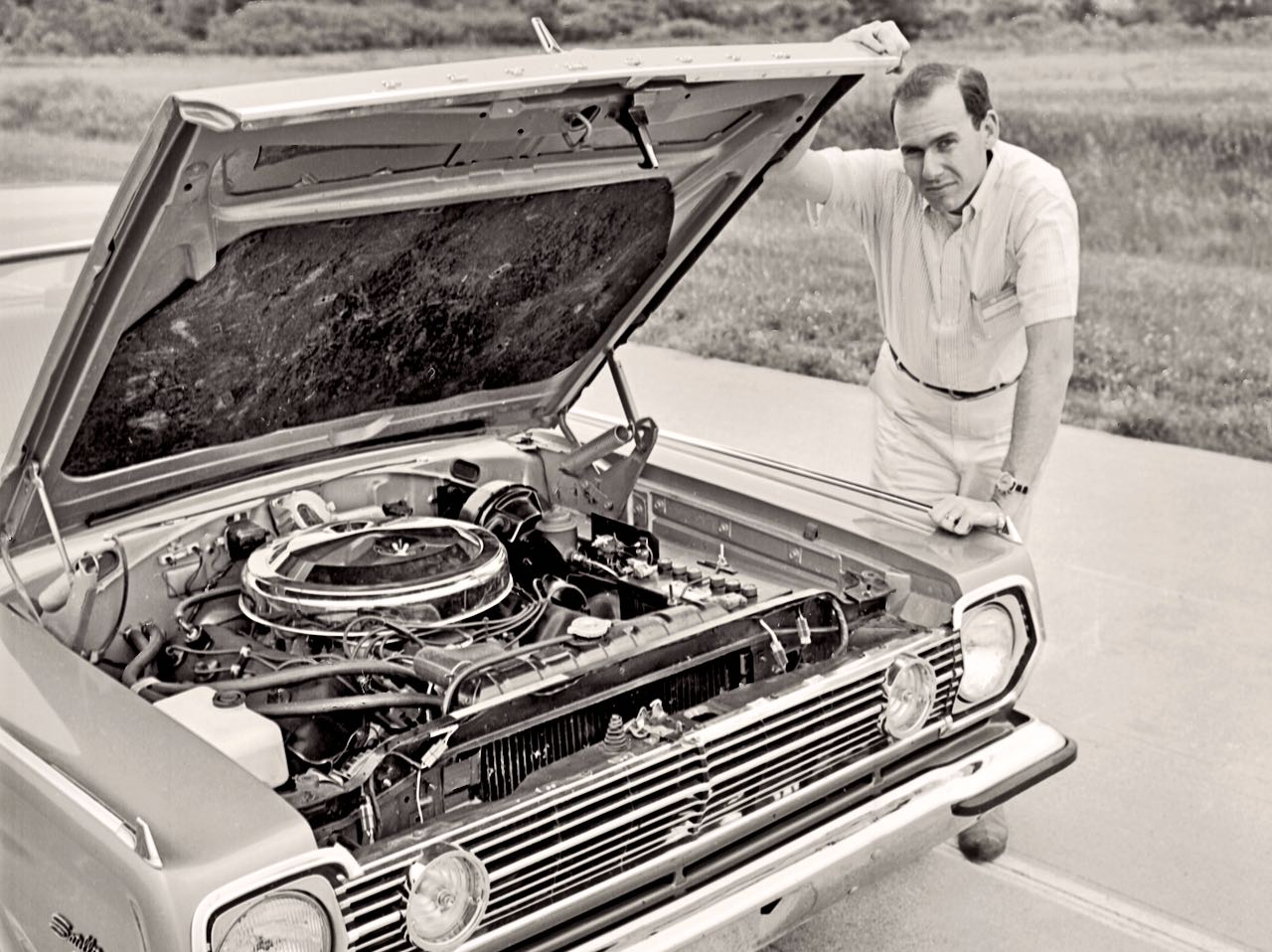 The biggest news for 1966 was the 426 Dodge and Plymouth Street Hemi. After teasing us with on-again, off-again streetable 426 Hemi cars in 1965, the option was officially announced. Rated at 425 horsepower at 5,000 rpm and 490 pound-feet of torque at 4,000 rpm, the Street Hemi was, essentially, a detuned race Hemi with a milder 276-degree solid-lifter camshaft, 10.25-to-1 compression, and dual inline Carter AFB four-barrels. It boasted the same valve and port size cast-iron race Hemi heads and added new cast-iron long-branch exhaust manifolds. Since race heads did not have provisions for exhaust heat crossover, heat was piped from an exhaust header to the intake manifold on the STREET (426 HEMI) IS NEAT! engine
Early plans focused on making the 426 Street Hemi available in full-size models. I actually drove a prototype ’65 Dodge 426 Hemi Polara in June 1964. I remember telling an engineer: “The only Hemi Polaras you’ll sell will be to the California Highway Patrol, and other law enforcement agencies!”
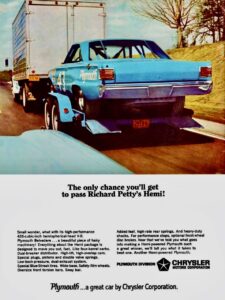 Mopar Supercar enthusiasts, drag racers and stock car racing fans rejoiced when the STREET (426 HEMI) IS NEAT! was announced. With the engine available as a production option, NASCAR’s Bill France reversed his 1965 Hemi ban. On Sunday, February 27, 1966, Richard Petty won the Daytona 500 in his Petty Blue ’66 Plymouth, and David Pearson’s Cotton Owens ’66 Dodge placed third. Both were Hemi-powered.
Showroom stock 426 Street Hemi Mopars were often less than successful street racers as they could not breathe that well with restrictive factory tuning specs and exhaust systems. Typically tuned with headers, ignition, and carb mods, they came alive, proving that STREET (426 HEMI) IS NEAT!
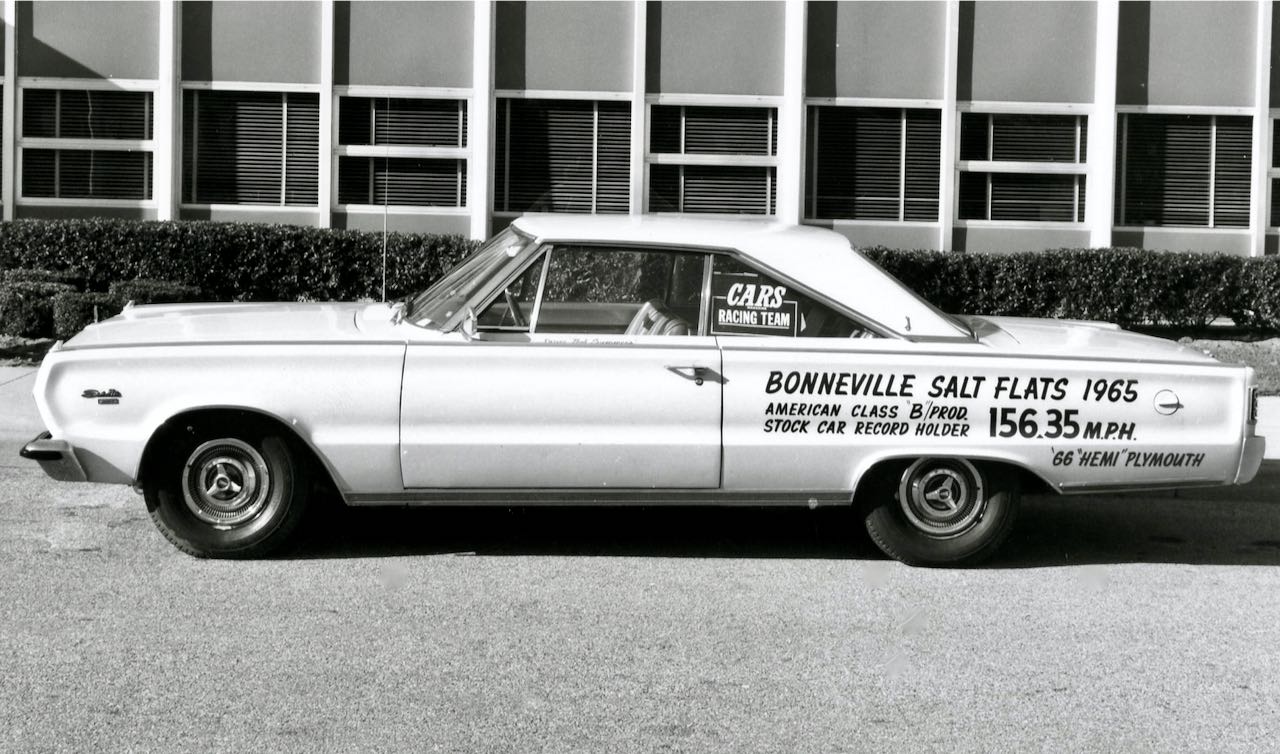
When new, a ’66 Plymouth 426 Street Hemi Satellite set the B/Production Flying Mile record of 156.35 mph at the Bonneville Salt Flats. Then it got license plates, and I used it for daily commuting to work at Hi-Performance CARS magazine in New York City.
Normally, I wouldn’t have paid much attention when land-speed racer Bob Summers drove a ’66 Plymouth to B/Production records at Bonneville in August 1965. Carmakers and racers had been contesting Production records at the Salt Flats for decades. What did pique my interest was that Street Hemi production hadn’t started yet!
Bob Summers’ pre-production ’66 Plymouth 426 Street Hemi registered a top speed of 160.82 mph and set a USAC-FIA two-way Flying Mile record of 156.35 mph. It also set the two-way Flying Kilometer record of 155.30 mph. The B/Production records had been “owned” by factory Pontiacs prepared and driven by Mickey Thompson.
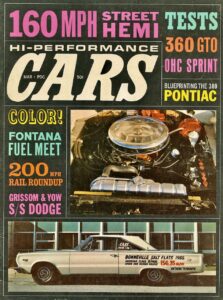 A couple of months after Summers set the records, I was joking with a Chrysler PR guy about their record-setting STREET (426 HEMI) IS NEAT! Plymouth. “Give me a break. That Satellite is probably as stock as the Golden Commando’s A/FX racecar!”
He called my bluff: “That Satellite is so stock; you can check our USAC/FIA records then drive it home. In fact, you can even keep it for a couple of weeks. Use it for commuting to Manhattan. Take it out to the track. Do whatever you want with it.”
“Remember that gold Street Hemi Satellite you drove in June at Chelsea? Well, you’ll be driving it again. Only now it’s white and has a four-speed instead of its original automatic.”
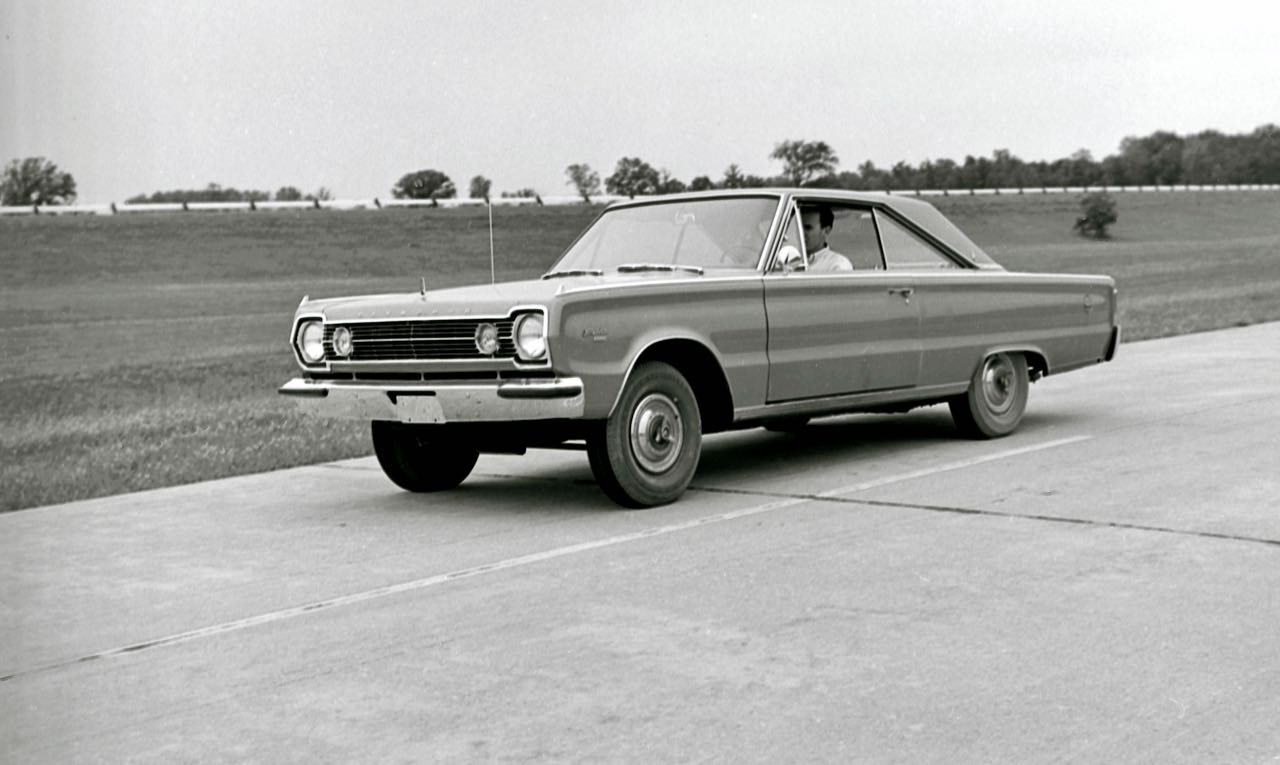
A few months earlier I had driven a Citron Gold 426 Street Hemi Satellite hardtop, below, at the 1966 Press Preview at Chrysler’s Chelsea Proving Ground. It was equipped with TorqueFlite and 3.23 gears. I’m pretty sure it also had power steering. The white record-setting Satellite I picked up in November was the very same Citron Gold Satellite I had driven in June. Chipped paint revealed its original color, and the side view mirror that was removed for Bonneville had been reinstalled. The power-assisted steering was replaced with quick-ratio manual.
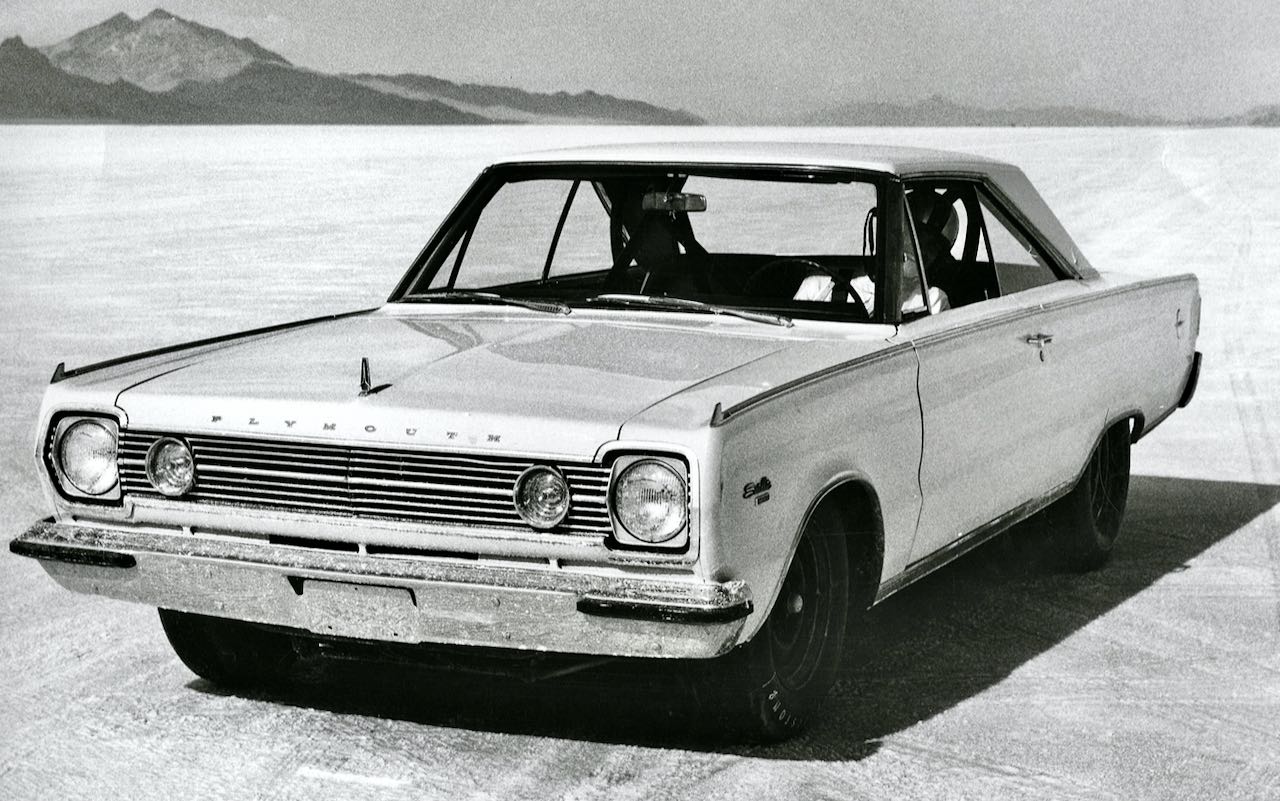
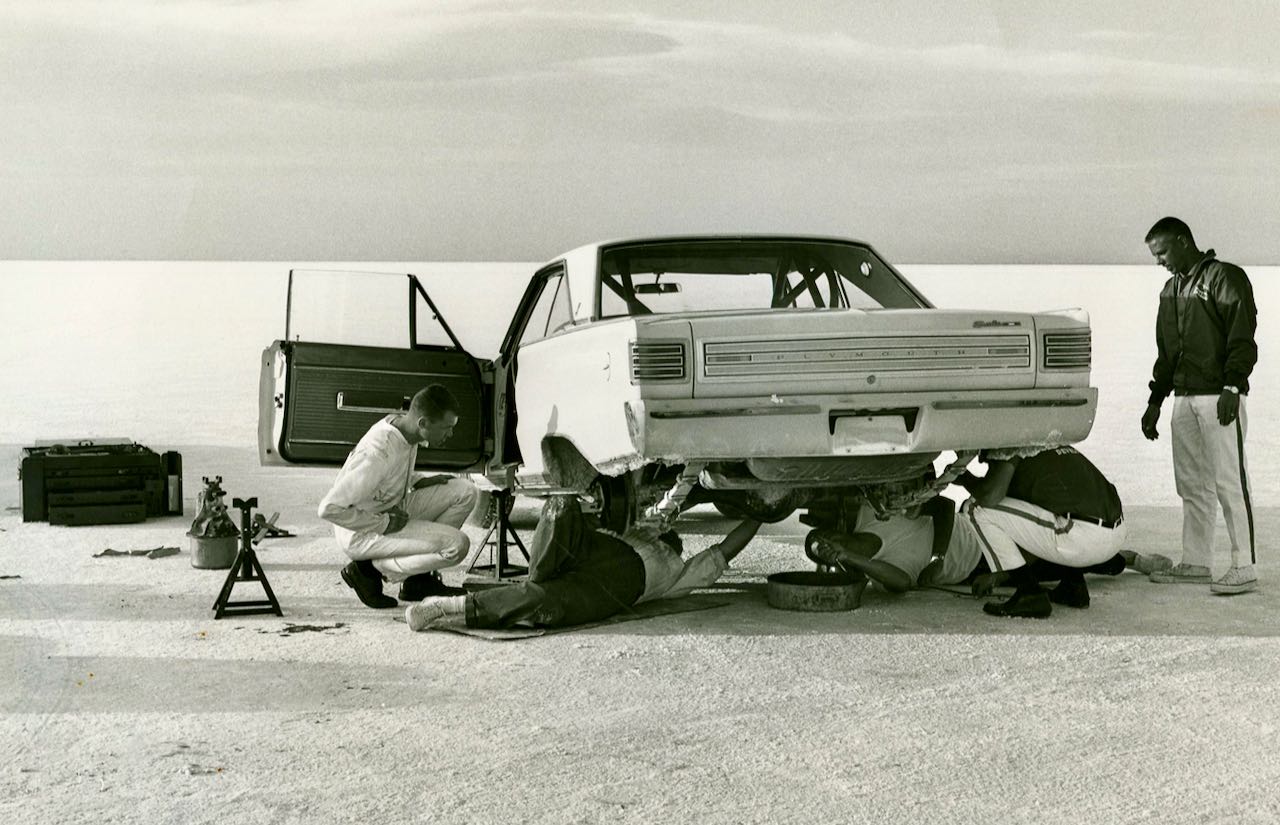 Installing and removing the multi-point roll bar left scars on the gold vinyl seats. Because of its ultra-stiff ride and balky clutch that wouldn’t allow aggressive shifting, I brought the Street Hemi to my local Hemi experts at Pacers Automotive, Oceanside, NY, to have it checked out. Once up on a lift, we knew for sure this was the actual record-holder. There were still traces of salt deposits, and the A-833 four-speed was obviously installed post-production. Telltale saw marks on the floorboard, and a cast-steel bellhousing revealed extensive modifications. The bellhousing casting number, 2206044, and smaller 10 ½-inch clutch were traced to 1964-1965 factory racecars. All four-speed ’66 Street Hemis came with 11-inch clutches and cast-iron bellhousings.
 Charlie Dodge, left, and George Snizek at Pacers tried lubricating the clutch, but to no avail. It was obvious that salt had taken its toll. They drilled out the clutch cross-shaft, installed a lube fitting, and pumped it full of grease. There was nothing they could do about improving its brakes. When this car was built, front discs were not yet available. The standard 11-inch Police car drum brakes with metallic linings left a lot to be desired with our STREET (426 HEMI) IS NEAT! Plymouth.
The Satellite’s front suspension had been lowered slightly, and the sway bar was thicker than the production .94-inch bar. An eight-inch-wide steel “hat” protected the deep oil pan, much like a skid plate on a rally car. There were numerous suspension/drivetrain modifications, including welded-in steel torque boxes used to anchor the roll bar. The 2.93-to-1 Bonneville gears in the 9 ¾-inch Dana 60 Sure-Grip rear had been swapped with 3.54s.
After one week of daily commuting in rush hour traffic from suburban East Rockaway, LI to Manhattan, I had enough of the Satellite’s biceps-building steering and 6 to 7 mpg consumption of Sunoco 260. Our Satellite’s “billboard” lettering proved to be a magnet for cops and restricted my racing to Westhampton drag strip. With 7.75×14-inch Goodyear Police tires, we started off running in the mid-14s at speeds around 105 mph. By the end of the day, our best time was 108 mph in 13.95 seconds.
Using our stopwatch, 0-to-60 sprints came in around 5.5 seconds. We were impressed considering its rear gearing and closed exhausts. Quarter-mile times were better than expected. I had little doubt that its engine had been “breathed on” by Chrysler Engineering before Bonneville.
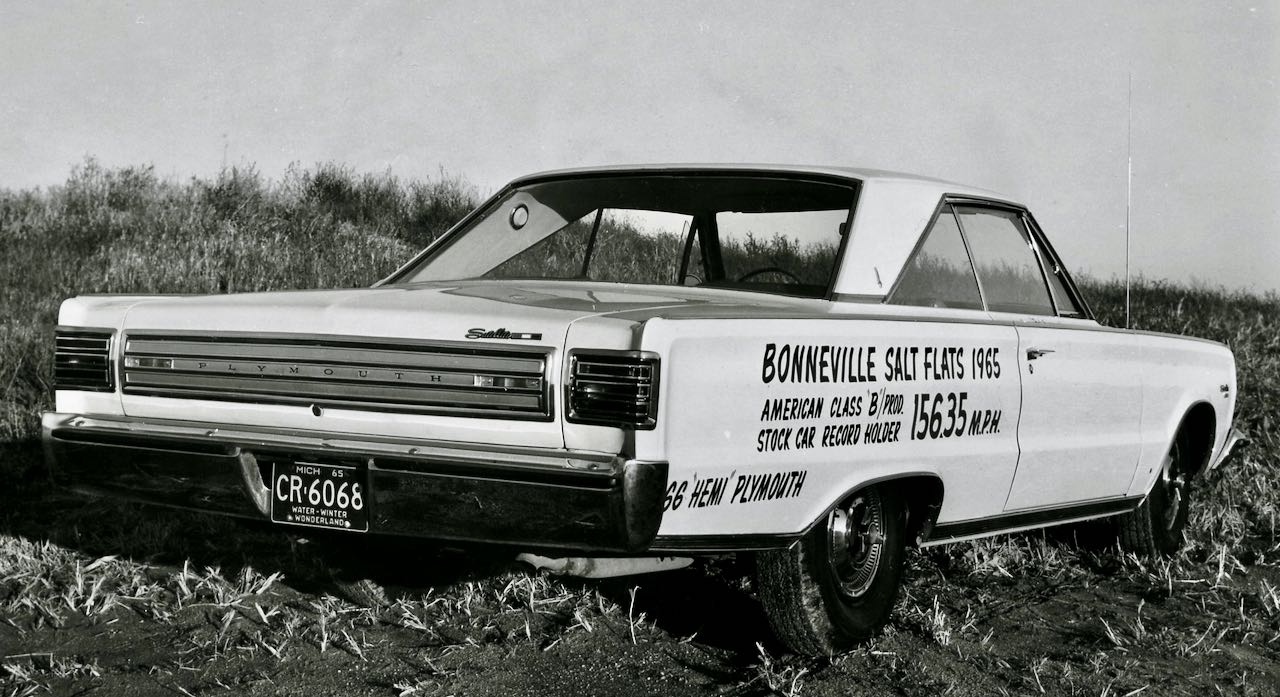 Even with its steering and braking shortcomings and unquenchable thirst for Sunoco 260, it was really cool driving the STREET (426 HEMI) IS NEAT! Satellite before and after Bob Summers drove it into the record books!
Check with our friends at OVER-DRIVE magazine for more info on the 1966 midsize Plymouth lineup @ https://over-drive-magazine.com/2024/07/15/1966-plymouth-mid-size-cars-fact-sheet/
For a copy of the Plymouth STREET (426 HEMI) IS NEAT! brochure, https://over-drive-magazine.com/wp-content/uploads/2023/04/1966-Street-Hemi-Brochure-1-14.pdf
The Car Life magazine road test is available @ https://over-drive-magazine.com/wp-content/uploads/2024/07/1966-07-CL-1966-Plymouth-Street-Hemi-Test-1-5.pdf