
Late to the Ponycar Party, the AMC PONYCAR: 390 (SUPER) JAVELIN was a righteous competitor!
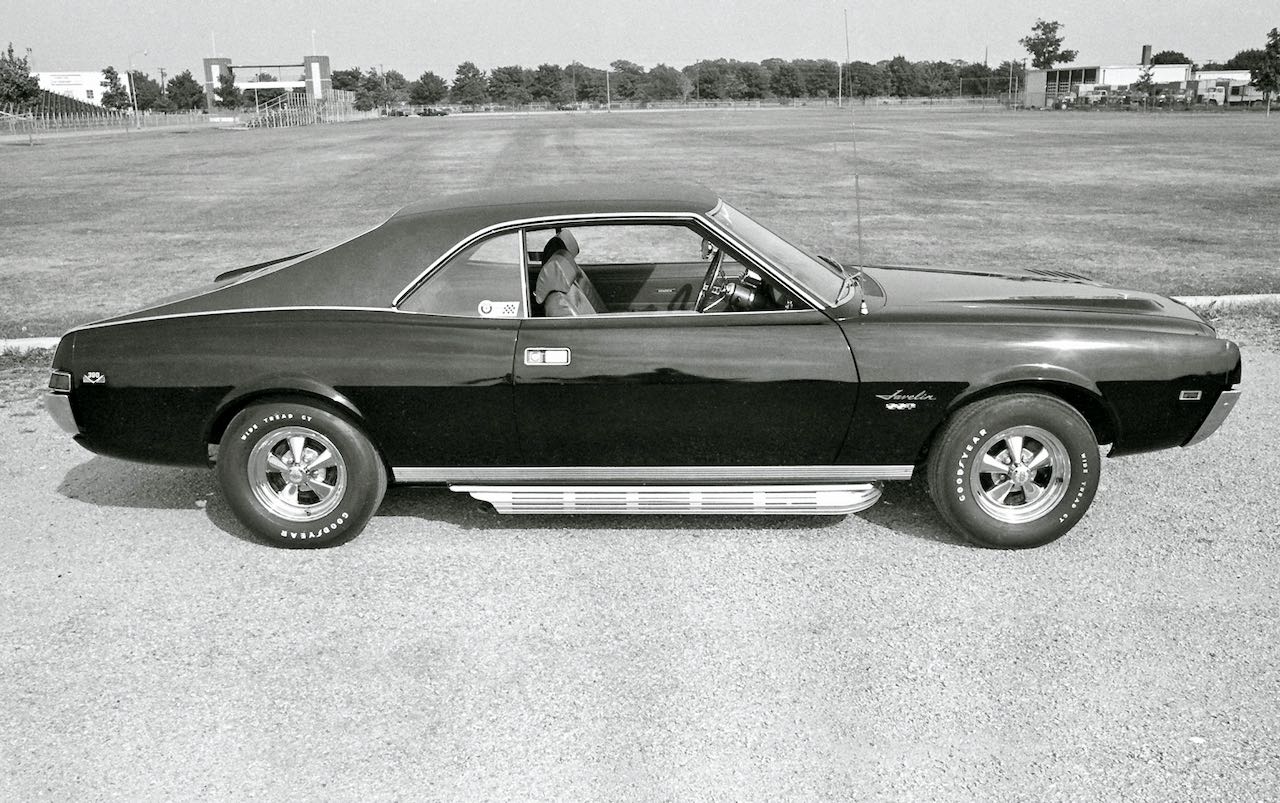
 With support from AMC’s manager of Performance Activities, Carl Chakmakian, and our friends at LAB Engineering, Motion Performance, and Pacers Automotive back in 1968, we transformed a stock 390 Javelin into a Super 390 Javelin. It turned out so well that I bought it!
I had test-driven a 390 Javelin at a Press preview and really liked it. It wasn’t a rocketship for sure, but it had potential. Thanks to a larger-than-traditional Ponycar cockpit, there was plenty of room for my 6-foot-two frame. Its biggest engine option was the 390/315 with mild hydraulic-lifter cam and a small Carter AFB. It did, however, boast a very strong lower end thanks to forged steel rods and a five-main-bearing forged crank. Talking with AMC engineers confirmed that 400 horsepower was within reach without a lot of work. I was hooked!
We discussed the possibility of building a Hi-Performance CARS Project 390 Javelin with AMC public relations, and they responded by sending me a new car order form. I chose a Matador Red Javelin SST with red interior, black vinyl roof, 390 engine, automatic, 3.15 Twin-Grip gears, and AMX suspension with top-mount traction bars.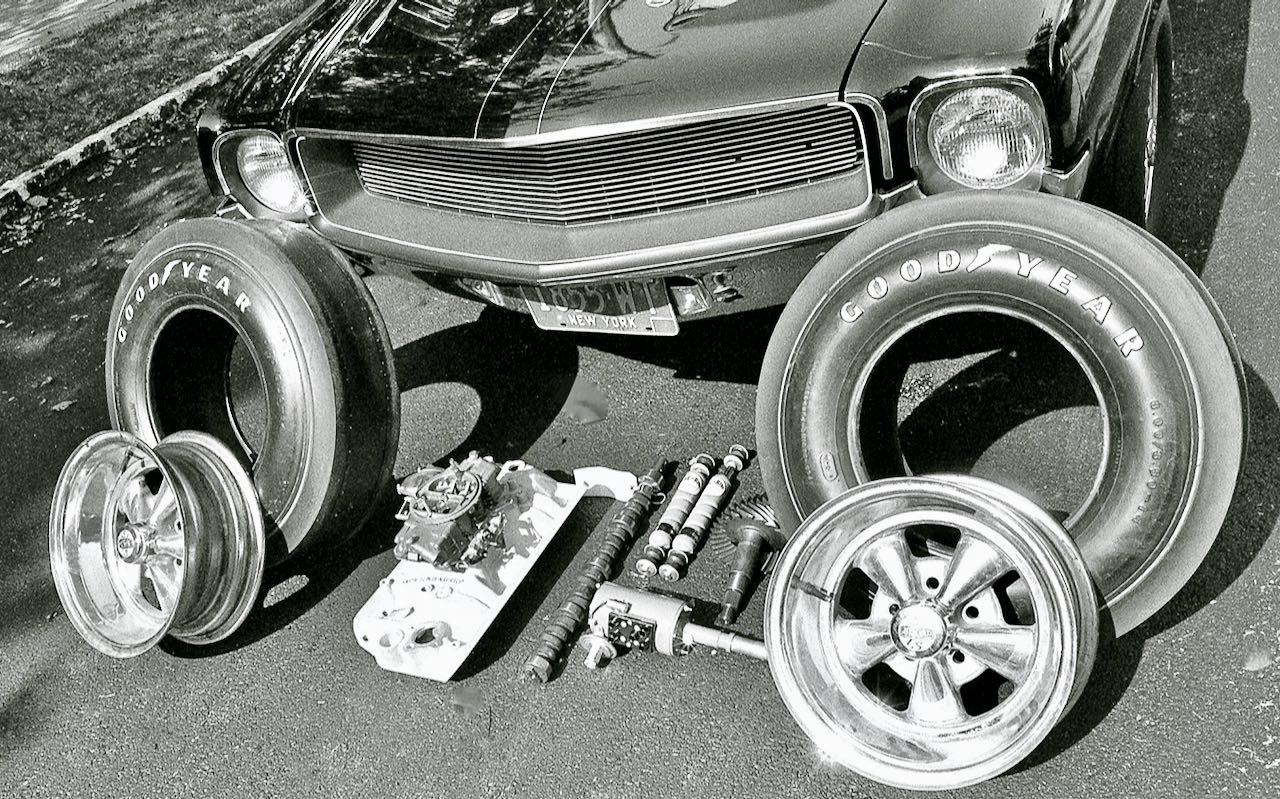 Our Javelin was a very early-build 390 car, so the engine was not fitted with the standard chrome dress-up kit. Since we planned on changing valve covers and air cleaner anyway, it didn’t matter. What did matter, however, was that it didn’t run that well. Once on Motion’s Clayton dyno and hooked up to a Sun 1020 scope, Joel Rosen discovered that four plug wires were crossed up! With the stock Javelin running right, the engine produced 170 rear-wheel horsepower at approximately 5,000 rpm. The mission was to turn the stocker into the AMC PONYCAR: 390 (SUPER) JAVELIN.
With a 170-horsepower baseline, Rosen modified the stock Carter AFB by drilling out the secondary jets .002-inch. He installed a set of aluminum spacer plates between the carb and manifold to ward off fuel percolation and vapor lock. The distributor was re-curved for a total advance of 35 degrees, in by 2,500 rpm, and M/P-Mallory 7,500-rpm points were installed. A high-flow air cleaner replaced the big silenced air cleaner, and Champion N-10-Y plugs were installed. Back on the dyno, we saw an increase of 20 rear wheel horsepower -190 at 5,000 rpm. The total cost for dyno tuning and parts was $55.43!
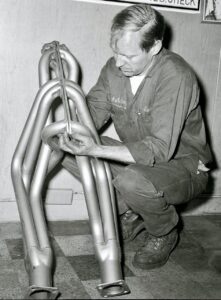 Over at Pacers Automotive, Jardine headers were installed, and outside exhausts were fabricated using custom Douglass 50-inch piggyback mufflers covered with mid-series Corvette finned aluminum exhaust covers, fabricated by Charlie Dodge, right. At the same time, Sun gauges were fitted in the dash, and a Sun tach was mounted on the steering column. The stock steering wheel was replaced with a sporty Grant wood wheel. Stock wheels and tires were swapped for chromed S/S Cragar mags with Goodyear F-Series Wide-Tread GT tires.
Before internal engine modifications, Motion made some intake and ignition upgrades. An Edelbrock 180-degree aluminum intake manifold with a stock Holley R-3310-AAS four-barrel replaced the factory Carter AFB setup. The 780-800-cfm automatic choke Holley, standard on the 425-horsepower Corvette, was used with stock jetting. To ensure fuel supply at the top end, an M/P dual electric fuel pump was added.
The ignition system on our Project AMC PONYCAR: 390 (SUPER) JAVELIN was upgraded with an M/P Mallory Super-Spark full-centrifugal-advance dual-point distributor, Mark II coil, and Ramcharger burn-proof wires with Rajah plug clips. Total timing was dialed in at 36 degrees, all in by 2,000 rpm. Back on the chassis dyno after bolt-on mods, the Javelin generated 210 horsepower at 4,700 rpm and 220 at 5,000 rpm.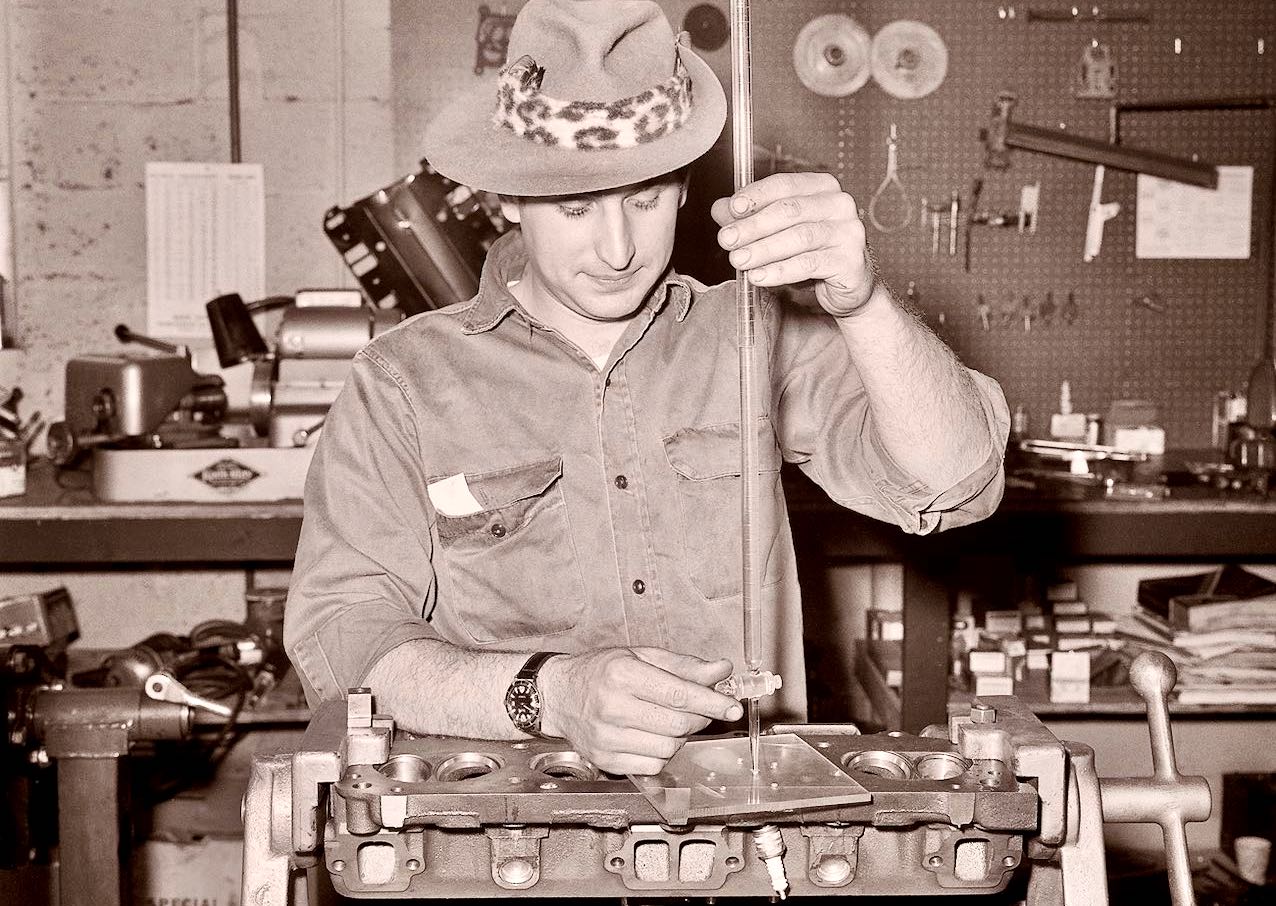 We consulted with Lee Bandrow and Bob Hall at LAB Engine Specialties, Lindenhurst, NY, about taking the 390 engine to the next level. Since spirited street driving was the mission, Lee, above, planned to change the camshaft and valve train and performance-prep the heads. Since the stock heads had 2.02-inch intake and 1.62-inch exhaust valves, Lee replaced them with super-light, hard-chromed, and swirl-polished high-performance Chevy/Corvette small-block 2.02/1.60-inch valves. The approximately 15-ounce-lighter valve train translated into an additional 750-1,000 free rpm. Heads were port-matched and machined for 51-cc chambers, and the stock cam was replaced with an AMC .477-inch lift and 302-degree duration cam and kit. Twin-Grip 3.90 gears, M/P Cure-Ride shocks, and weld-on traction bars were also installed on our Project AMC PONYCAR: 390 (SUPER) JAVELIN.
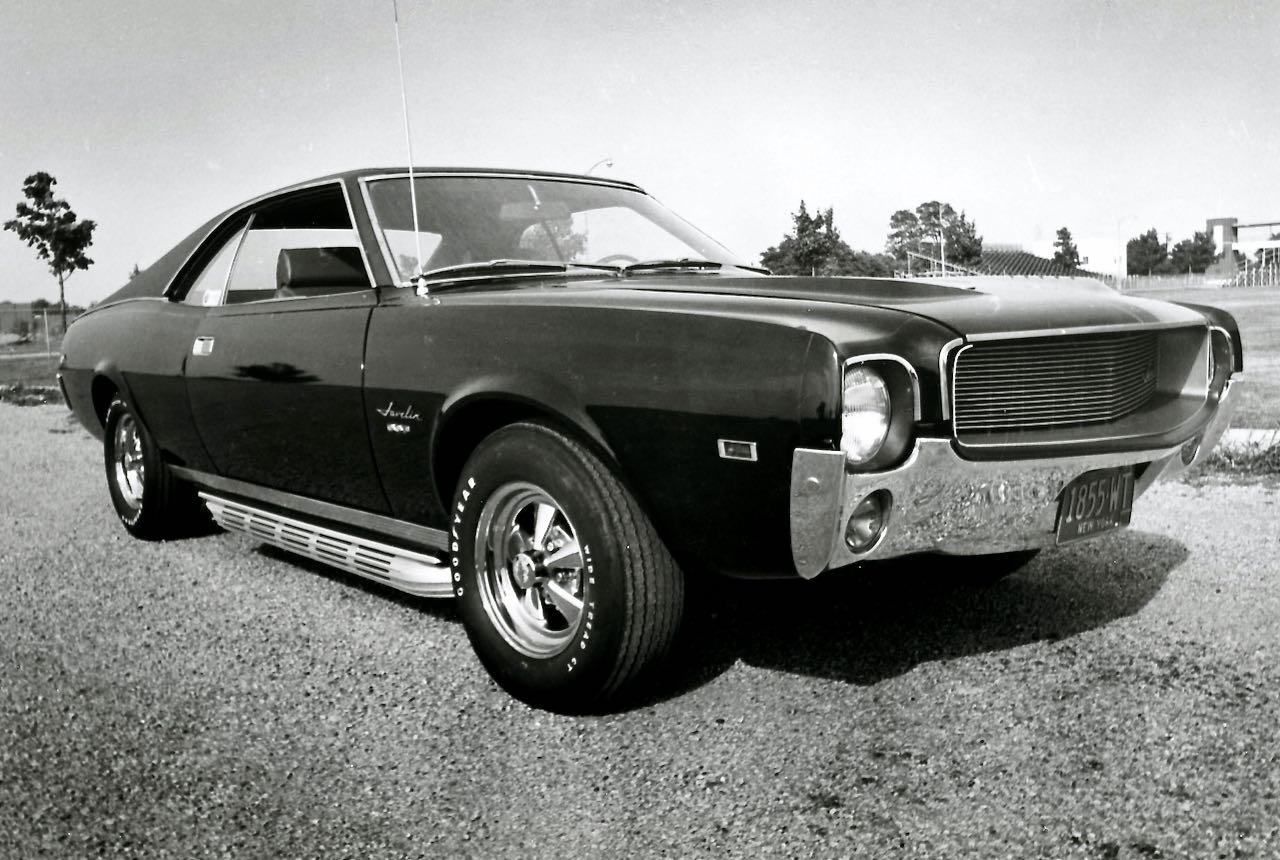 To give our Javelin some additional head-turning power, we had Herb Gary at Gary’s Auto Body in Sea Cliff, NY, replace the stock Javelin grille and hood with new 1968 ½ AMX panels and paint our Javelin black.
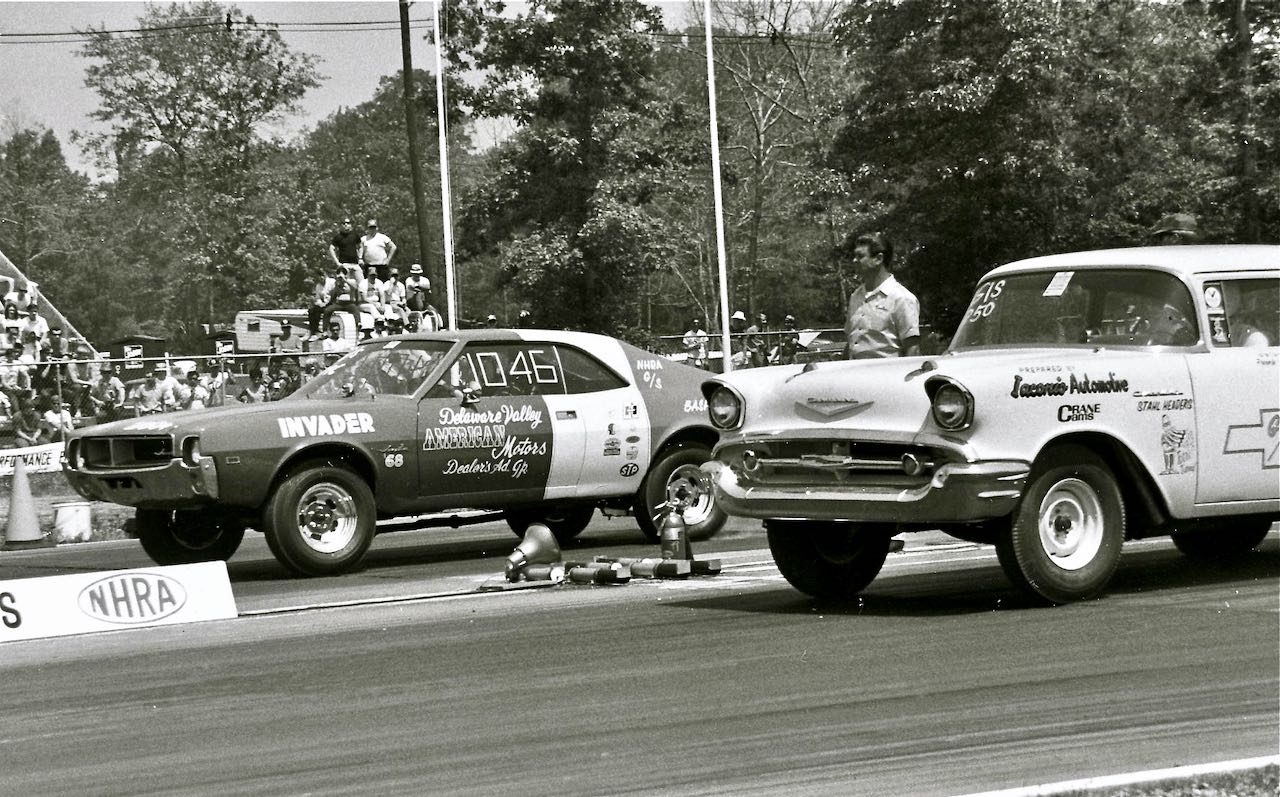
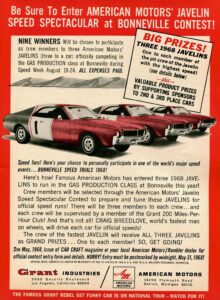 Race-prepped Javelins held their own in drag racing and even running in Gas Production Class at Bonneville in 1968. Grant Industries and American Motors sponsored Craig Breedlove, the world’s fastest man on wheels at the time, to run a three-car team on the Salt during Speed Week.
After our AMC PONYCAR: 390 (SUPER) JAVELIN Project wrapped up, and I owned the car, Motion Performance’s Joel Rosen and I played around with a variety of tuning mods, eventually getting the rear wheel horsepower up over 275. It could hold its own against big-block Ponycars, but not 396/375 Camaros. But that was within reach!
NOTE: Sadly, AMC, Gary’s Auto Body, Lab Engineering, Motion Performance, and Pacers Automotive are long gone. As is the location of our AMC PONYCAR: 390 (SUPER) JAVELIN.
To learn more about AMC’s Ponycar, please visit https://over-drive-magazine.com/2026/01/13/1968-amc-javelin-fact-sheet/