
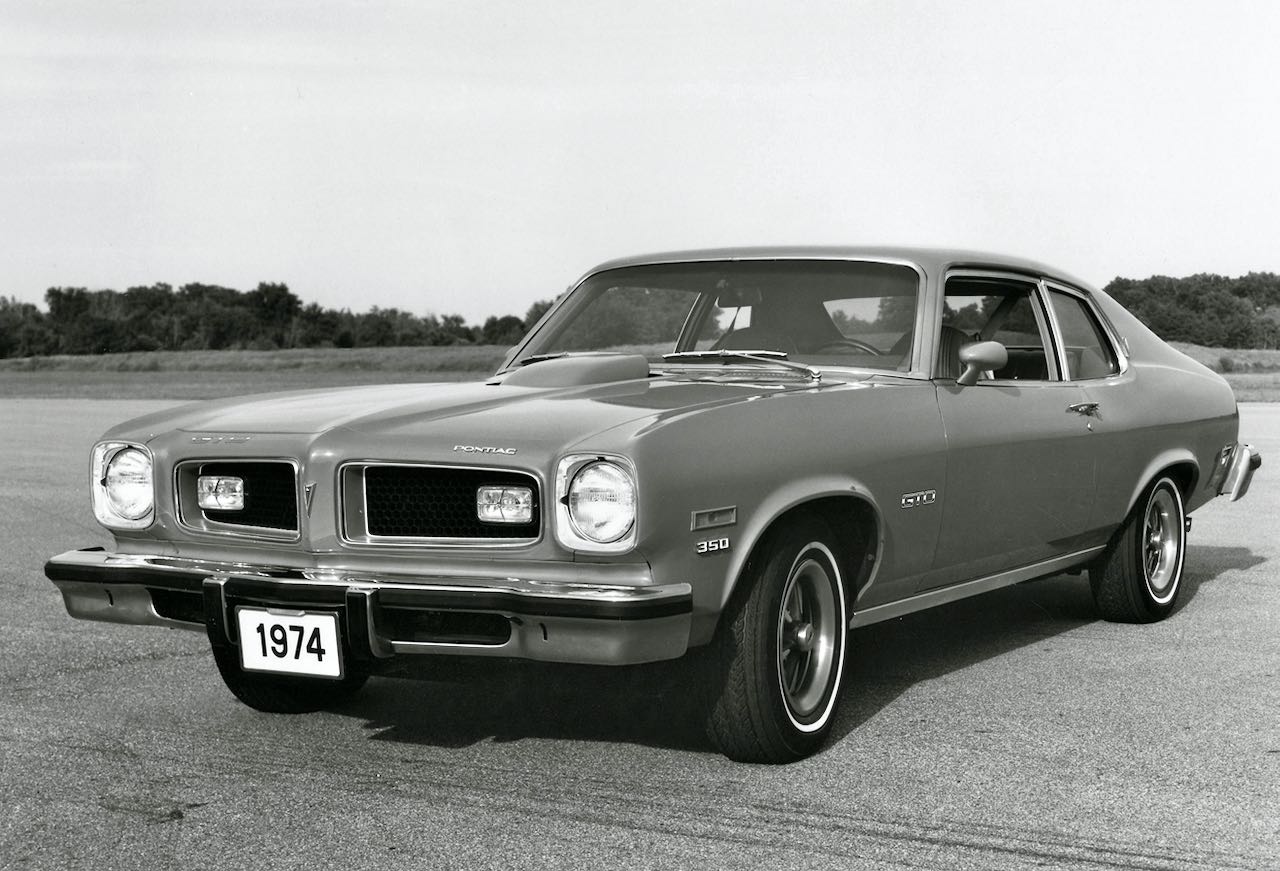
In 1974, Pontiac concentrated all its performance efforts on the SD-455 Firebirds, resulting in the ’74 PONTIAC GTO: END OF AN ERA!
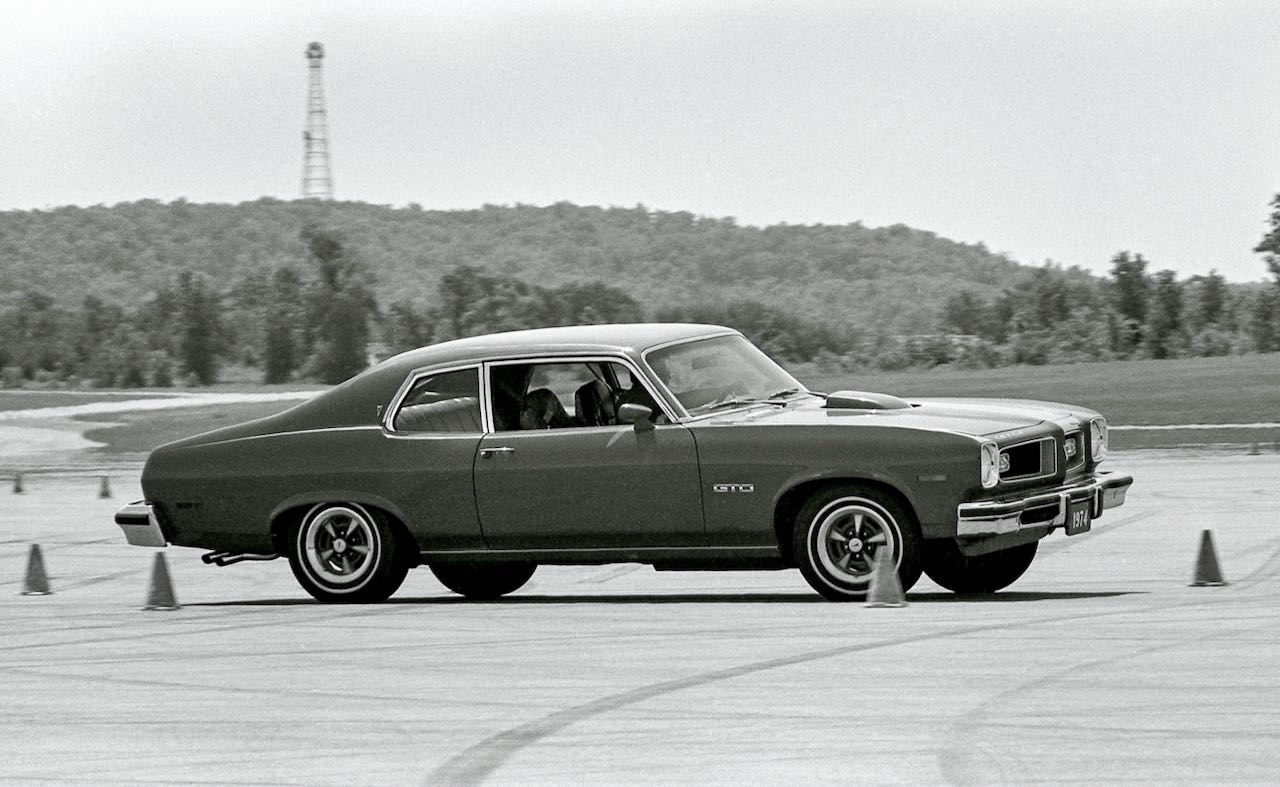
 The ’74 GTO represents Pontiac’s one-year-only, last-ditch attempt to save the iconic nameplate, which over the years had become synonymous with Supercar and Musclecar. The GTO ignited the Supercar Revolution in 1964, and ten years later became a mostly cosmetic option on the compact Ventura GM X-Body platform Pontiac inherited from Chevrolet (Nova). It signaled the end of an era for Pontiac enthusiasts.
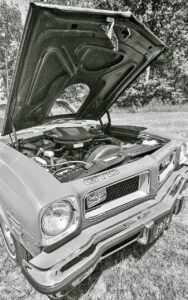
The handwriting was on the wall, and the factory figured that if they could repackage the GTO and price it right, Pontiac’s youth-market performance-car concept could be salvaged. The Ventura was priced right, but Pontiac did little to promote what could have become another cult car. Instead of putting a potent big-block in the new GTO, they went with a 200-horsepower, four-barrel 350. While three-speed and Saginaw M20 four-speed and TH-350 automatic transmissions were available, cars delivered in California were limited to the automatics based on its stricter emission laws.
At a time when “lean and clean” and “downsizing” were the mandates in Motown, Pontiac defied all odds and developed the Super-Duty 455, a large-displacement, emissions-legal engine strictly for motorheads! Unfortunately, the celebrated and valued GTO nameplate was sullied.
When we drove 1973 models with ugly, heavy, energy-absorbing front bumpers in June-July 1972 at GM’s Milford Proving Ground, we were already aware that 1974 models would only be worse. We also knew that unleaded gas and catalytic converters were on the horizon. What we didn’t know was that an Arab oil embargo in 1973 would ignite gas rationing and panic at the pumps, further fueling an industry emphasis on economy.
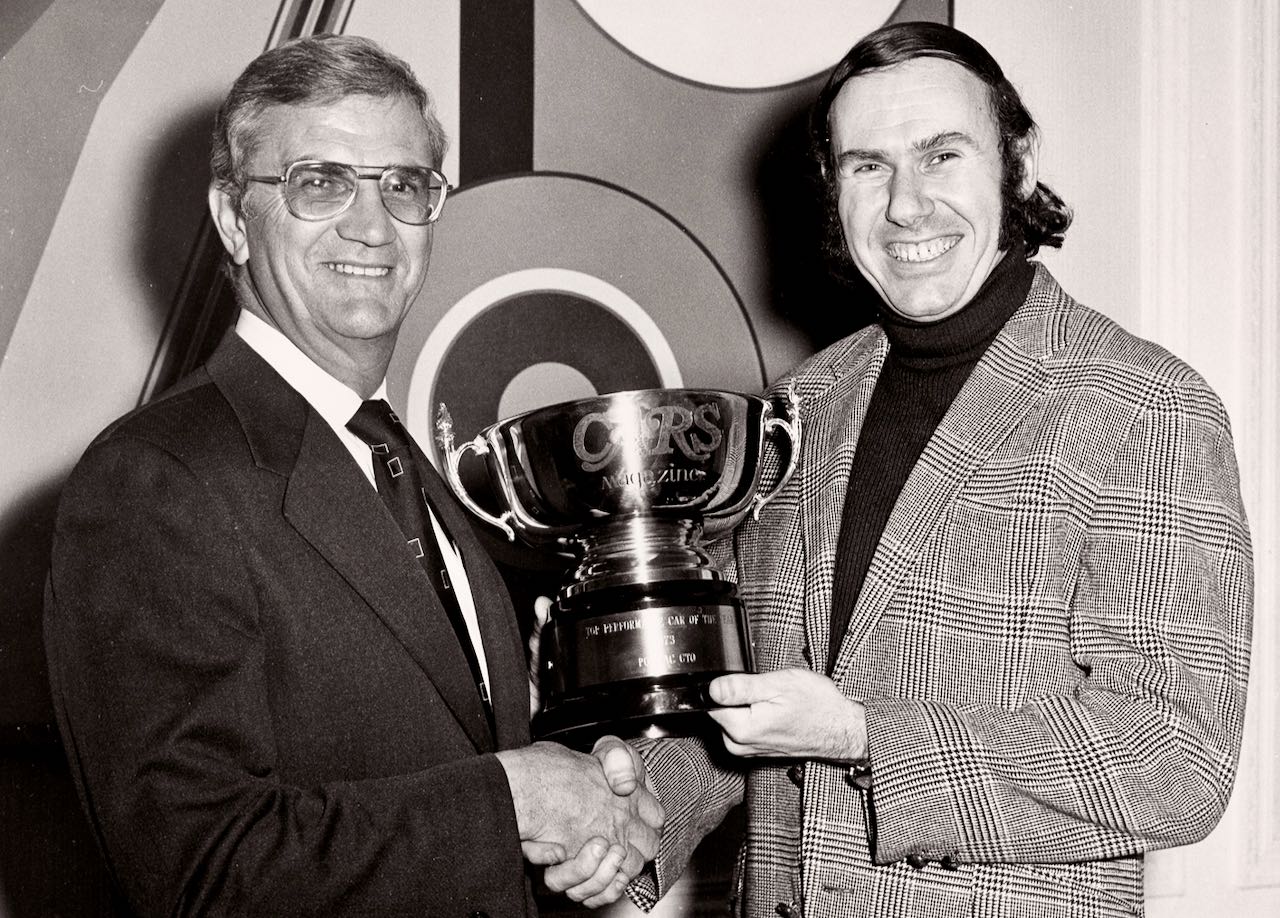
 The SD-455 engine had been released during Jim McDonald’s watch as Pontiac’s General Manager, but Martin Cassario, above, left with CARS’ Marty Schorr, who replaced him, had no interest in performance cars. The ’73 SD-455 GTO was killed before Job One, after we (Hi-Performance CARS magazine, right) had named it Top Performance Car of the Year. We had honored a car that didn’t exist!
Pontiac’s midsize ‘74 LeMans was much heavier than its predecessor, and Pontiac decided to GTO-brand the 111-inch wheelbase X-Body Ventura. Since it was already set up for a 350 Pontiac engine, all they did was upgrade the L76 power with a four-barrel, dual exhausts, and a functional Trans-Am “Shaker” scoop. A 350/200 engine plus decals, neat wheels, optional hood tach and new Radial Tuned Suspension turned a Ventura into a one-year-only GTO. Pontiac sold 7,058 GTO-option Venturas, compared with just 4,806 GTO coupes the year before. After the ’74 PONTIAC GTO: END OF AN ERA!, Pontiac opted to archive the GTO brand.
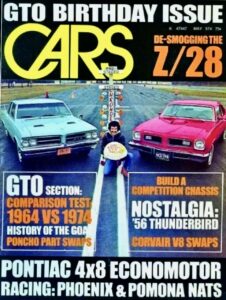 The cover story of the May 1974 issue of CARS featured a comparative road and drag test between a four-speed ’74 GTO with 3.08 gears and a ’64 GTO with a 389/325 four-barrel engine, automatic transmission, and 3.55 Posi gears. Both GTOs were stock. Organized by Joe Oldham and with Nunzi Automotive’s Nunzi Romano behind the wheel, the ’74 recorded a best run at 88 mph in 15.72 seconds. The first model ’64 GTO turned 90 mph in 15.64 seconds. Both cars sprinted to 60 mph in the mid-high 7s. Pontiac supplied the ’74 GTO, while a friend of Nunzi’s from Brooklyn, Tony Celantino, brought his ’64 GTO to the test session at Englishtown Raceway Park. Both Oldham and Nunzi felt that, while they preferred the original Goat, the ’74 PONTIAC GTO: END OF AN ERA! delivered superior ride and handling qualities.
For the complete ’74 PONTIAC GTO: END OF AN ERA! story, check out Mike McNessor’s feature @ https://www.hemmings.com/stories/the-one-year-only-ventura-based-goat-is-worth-a-second-look/?uemlid=e323c71347790f699ba35a9dc01d49ac3f938885a7df6321087c8c9b4c0dd333