
Ford’s prototype Mark III GT40 road car that I test drove for Hi-Performance CARS magazine after its reveal at the 1967 New York International Auto Show is back in town. It’s MAYHEM IN MANHATTAN…AGAIN!
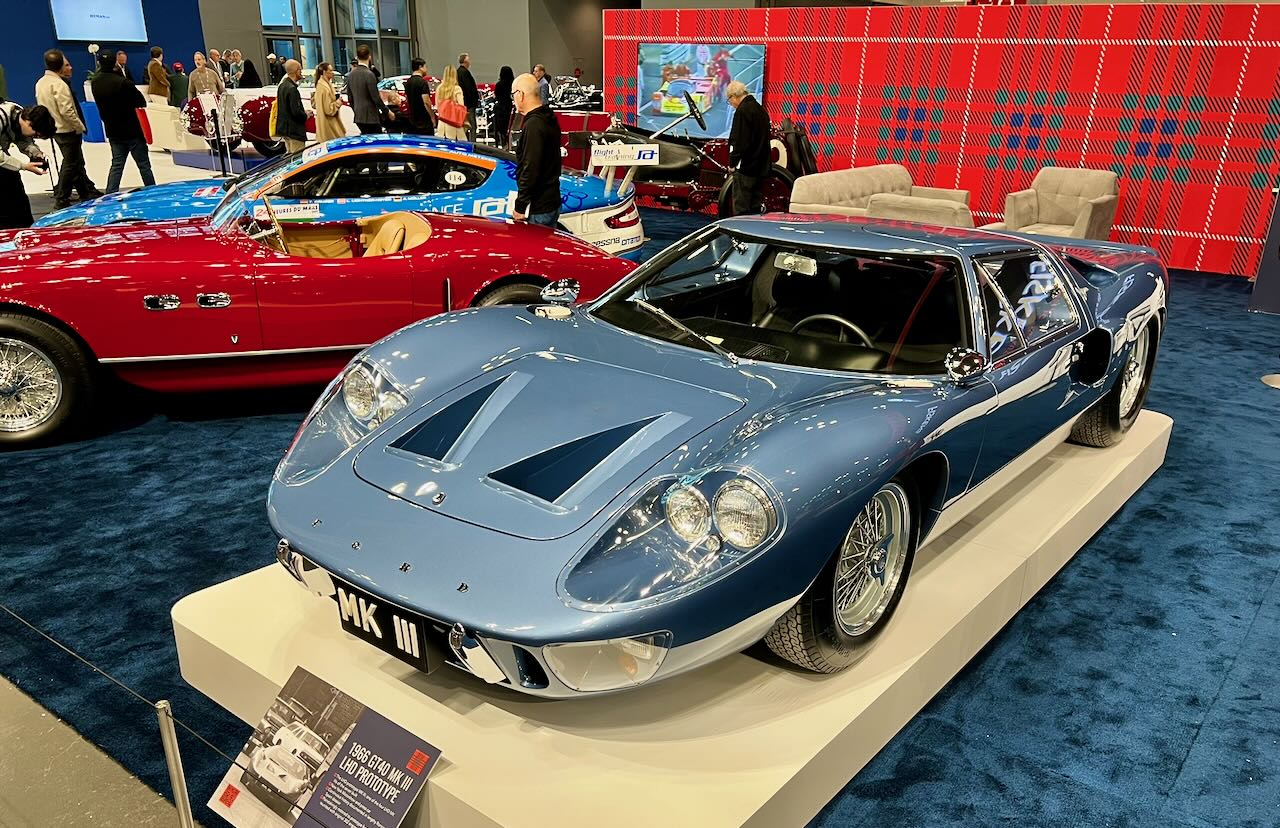
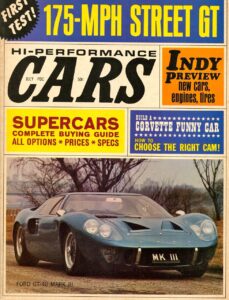 Even with the sensory overload I experienced walking on to the show floor at RETROMOBILE NYC 2026 at the Javits Center in Manhattan, my eyes immediately went to a small exhibit of unaffordable exotica including its centerpiece, a blue Mark III GT40. Without reading the signage or checking its VIN tag, I immediately knew it was the same car that I had test-driven for a magazine cover story. It was the prototype/first production Mark III, and the main attraction at Ford’s NYIAS exhibit before I got the keys to drive it. I had never imagined how much it would be worth – seven or eight figures – almost 60 years later.
In April 1967, my friend Bill Kolb and I tested America’s first real Supercar – even though it was manufactured in the UK – for Hi-Performance CARS Magazine. We dodged New York City taxis, delivery trucks and the occasional cop car, and frightened woman, children and puppies! It was a glorious day. Thanks to RETROMOBILE NYC, it’s MAYHEM IN MANHATTAN…AGAIN!
Decades before there was a high-horsepower C6-C8 Corvette, a Viper and the 2005-2006 Ford GT, America’s first and only real Supercar was Ford’s GT40 Mark III. For nitpickers, that would be Anglo-American. After a trio of GT40s dominated Le Mans in 1966, finishing 1-2-3 and kicking Enzo Ferrari’s butt back to Maranello, Ford looked for a repeat performance on the street. Enter the Mark III, a streetable, U.S.-legal version of the GT40 racecar built to satisfy FIA GT homologation specs. Its predecessor, the Mark I GT40 road car, was more racecar, and not legal for Main Street USA.
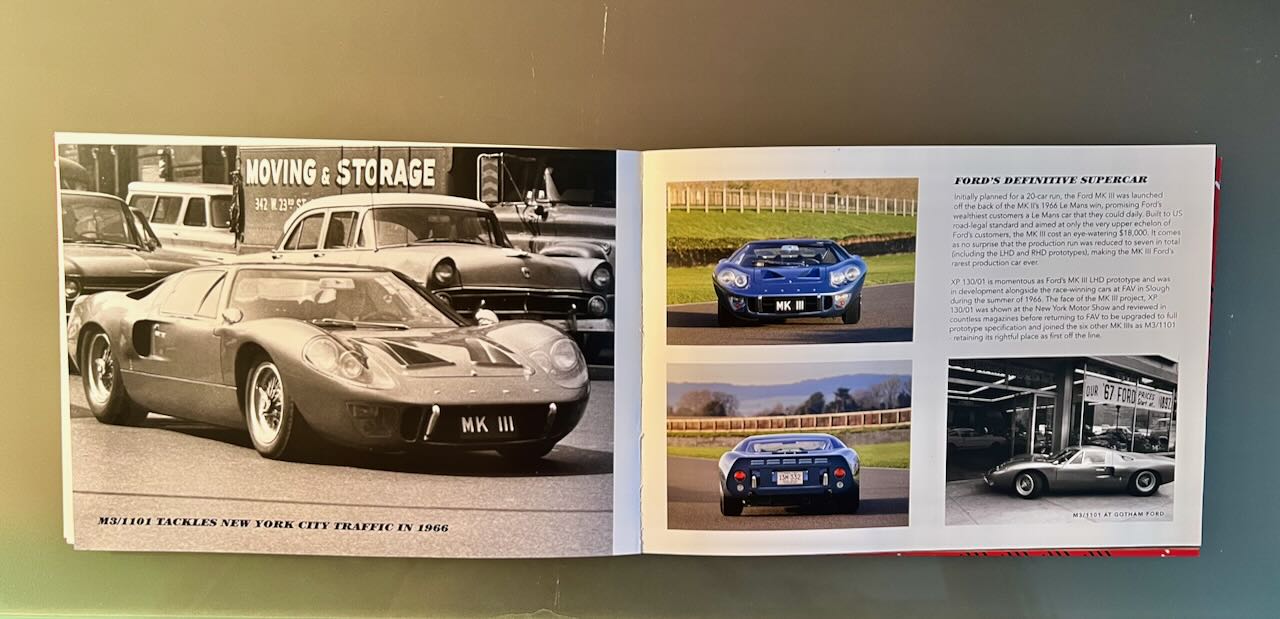
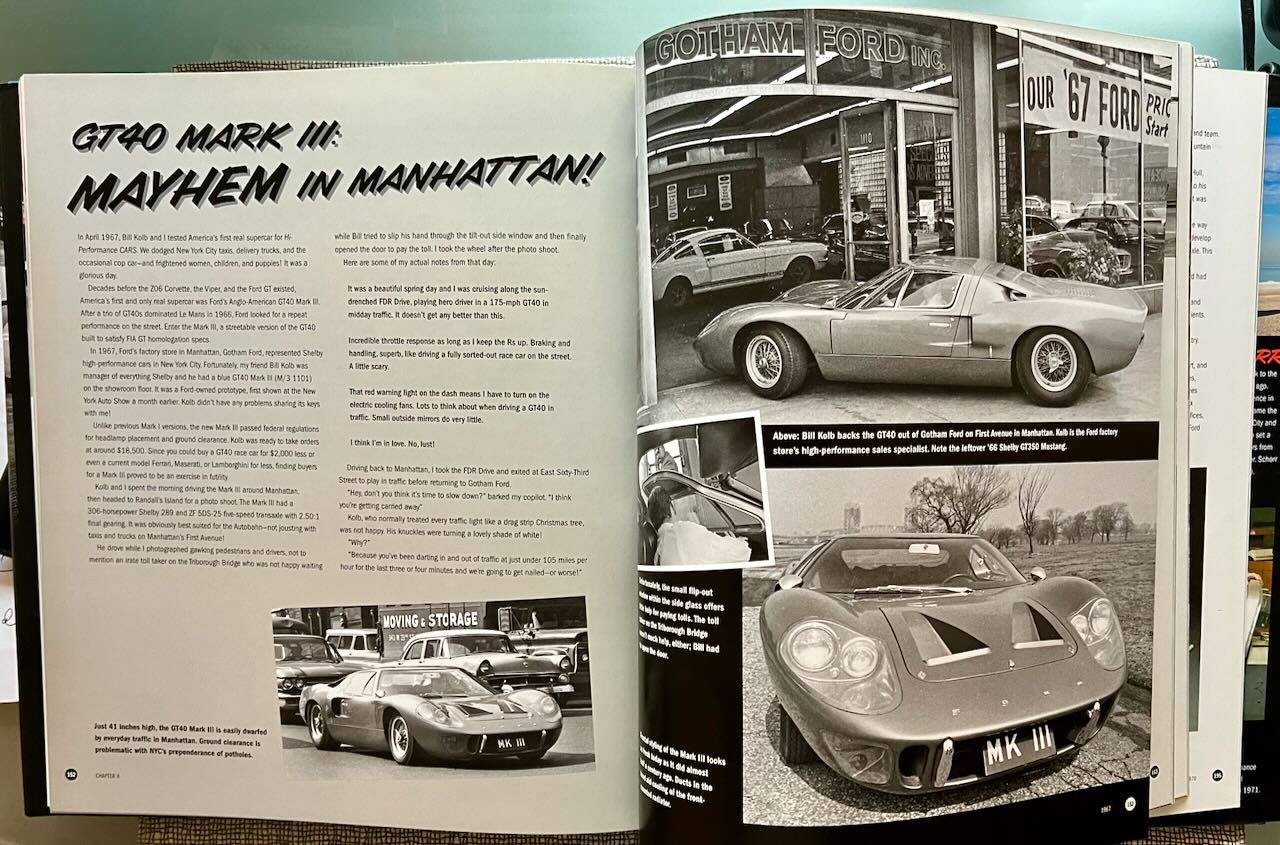 Fortunately, Bill Kolb, manager of in-house Shelby sales at Ford’s factory store in Manhattan, Gotham Ford, had a beautiful blue Mark III GT40 (chassis # M/3 1101) on the showroom floor. It was the Ford-owned prototype, shown at the New York International Auto Show a month earlier. Bill was the Mark III’s caretaker, along with a few others Mark I GT40 road cars from Dearborn, that had dents, scratches, bent Borrani wire wheels and flat tires in a warehouse in Secaucus, NJ. Kolb didn’t have any problems sharing its keys with me since in addition to being friends, I was editor of one of the few car magazines focused on performance cars in New York City.
 Bill and I spent the morning driving the Mark III around Manhattan, then headed over the Triborough bridge to Randall’s Island for a photo shoot. The Mark III was powered by a 306-horsepower Shelby 289 and ZF 5DS-25 five-speed transaxle with 2.50-to-1 final gearing. It was obviously best suited for the Autobahn, not jousting with taxis and trucks on Manhattan’s First Avenue!
“At 100 mph, the single Holley four-barrel 306-horsepower Shelby 289 just loafs along in Third gear. You tend to forget just how fast you are going, as the low semi-reclining driving position minimizes the feeling of speed,” Hi-Performance CARS, July 1967, THE ONLY WAY TO FLY!
To the best of my knowledge, the only two magazines in the U.S that seriously covered the first Mark III after the NYIAS debut were CAR & DRIVER, and my cover story in Hi-Performance CARS. There was some coverage in American Rodder, and MOTOR, the trade magazine published by Hearst, but not sure if their scribes actually drove it. Most of the mileage accumulated while it was based at Gotham Ford, can be attributed to Bill Kolb demonstrating it, driving it home (White Plains, NY) and back, and trips to Tasca Ford in Rhode Island where he discussed marketing Mark IIIs with Bob Tasca.
Ford Advanced Vehicles (FAV) contracted with John Wyer and his partner, John Willment (JW Automotive Engineering) to create a street version of the GT40, a real road-going GT. Wyer, a Brit who had headed up Ford Advanced Vehicles (FAV) along with Roy Lunn, were the GT40 racecar’s Godfathers. By then, JW Automotive Engineering had taken control of FAV in Slough, UK. Dubbed the GT40 Mark III, they chose a 306-horsepower 289 small-block with a single four-barrel carburetor, very similar to the engine used in the 1965-’66 Shelby GT-350 Mustangs, to power the first-built (prototype) Mark III. Unlike the previous Mark I road variant which was available only in RHD, the Mark III could be ordered in LHD or RHD. A total of just seven Mark IIIs was built, four fitted with LHD. In 1968, the 289 small-block was replaced with the 302. Earlier FAV had produced a run of RHD-only Mark I road cars, available with Weber-carbureted small-blocks.
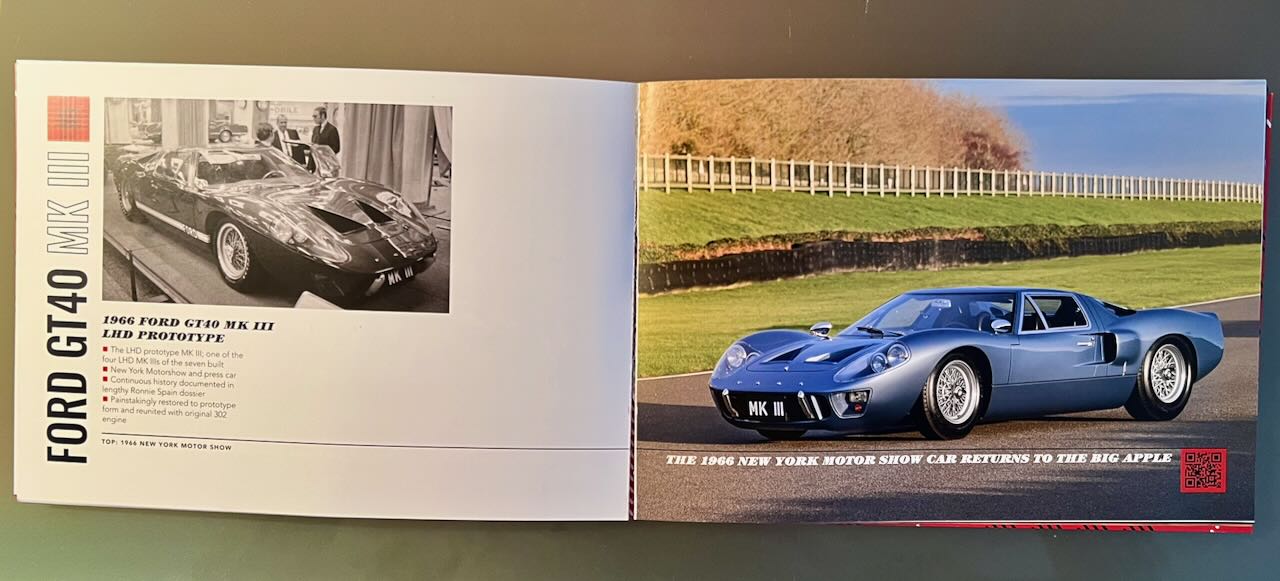 But what ever happened to the first Mark III we drove almost 60 years ago? It was used for promotions by Ford, passed through a number of private hands, and in 1968, brought up to the latest Mark III production specs. On 9/18/68 it was retrofitted with a four-barrel 302-inch small-block. It also received a NR7 ZF five-speed transaxle with 4.22-to-1 final drive ratio in place of the earlier ZF five-speed. New Borrani wire wheels, same size 6 ½ inch wide fronts and ½-inch larger 8 ½-inch wide rears, were added. On the trip for updates, it was involved in a bizarre accident where another GT40 MK III (# M/3 1106) was dropped on top of it, flattening its roof! It was sent to Kar-Kraft, where the first two prototype 427 Mark II racecars were developed and built followed by all J-Car/Mark IVs, repaired, and later ended up in the UK. For a few days at the Javits Center in November 2026, it was MAYHEM IN MANHATTAN…AGAIN!
 Upon completion, #M/3 1101 passed through a few owners and, in 2005, ended up back in the UK where it was converted to right-hand drive and restored to Mark I FIA race specs. Completed in January 2006, it received FIA certification making it eligible to vintage race in Europe. Later it was restored to the prototype’s original LHD configuration, with the restorer using my photography to ensure its accuracy. After considerable restoration and preservation efforts and being retrofitted with a 302 engine, it’s looks far better today than it did the day it left the factory in Slough. Fit and finish were not high points of the production road cars. It’s the most important GT40 road car, showcasing racecar heritage, horsepower, and timeless design. Once again, it is available for sale!
For more information about RETROMOBILE NYC, please visit https://www.retromobile.us